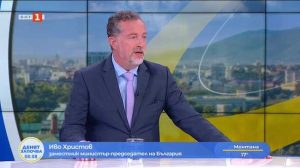
Цензура в действие: Нито дума в новините на БНТ за писмото от Гълъб Донев до ЕК (видео)
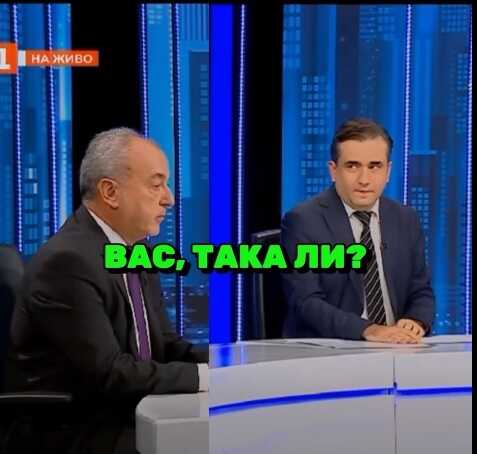
Цензура в действие: Нито дума в новините на БНТ за писмото от Гълъб Донев до ЕК (видео)
Вицепремиерът и финансов министър е подписал питането до Брюксел за парите за втора пенсия
След като вчера в “Панорама” съпредседателят на “Да, България” Божидар Божанов прочете писмо на Гълъб Донев до Европейската комисия, в което правителството предлага временно пренасочване на част от задължителната пенсионна вноска от втория стълб за периода 2027-2029-а година, днес новинарската емисия на БНТ не споменава нито дума за писмото.
“Миналата нощ и тази сутрин БНТ пусна объркания отговор на Гълъб Донев на снощното разкритие в “Панорама”, че на 2 ноември финансовият ни министър е изпратил писмо до ЕК с предложение парите за пенсии от втория стълб на 5 000 000 българи да влязат в НОИ. За сметка на това няма нито дума за писмото, което Божанов показа. Ако човек не е гледал “Панорама”, може да остане с впечатлението, че скандал няма”, написа съпредседателят на “Да, България” Ивайло Мирчев в своя Фейсбук профил.
Той напомни думите на правителството, което по-рано тази седмица отрече да планира подобно нещо и определи разкритието на ДБ като “фалшива новина” и “несъстоятелна истерия”.
“Правителството на лъжата налага “стандартите” си над БНТ много успешно. Да видим в следващите емисии как ще е представена лъжата на правителството. Очевидно Радев и Донев продължават да отстояват лъжите си, вместо да предоставят поисканата от нас кореспонденция между МФ и ЕК, от която да стане ясно, че това не е фалшива новина, а съвсем сериозно намерение на кабинета, за което е знаел премиерът, обсъждал го е в Брюксел, с финансовия министър е писал официални писма до ЕК. Ако продължават с лъжите, има само едно решение – българите да научат повече за реакцията на самата ЕК”, предупреди Мирчев.
Самият Божидар Божанов подчерта, че изключително рядко си позволява каквито и да е критики към медиите. Той обаче не подмина риска от инструментализирането на обществената телевизия във властови рупор.
“БНТ рискува бързо да се превърне в пропаганден канал на властта. Когато съзнателно скриеш контекста, значи криеш истината. Не е работа на политиците да казват какво да има или да няма в медиите. Но както е казал Оруел: „Журналистиката е да публикуваш нещо, което някой друг не иска да бъде публикувано; всичко останало е пиар“. Правителството на лъжата трябва веднага да спре превръщането БНТ в пропаганден защитник на властта”, заключи Божанов.
____________________________________________________________________________________________________________________________________________________________________________________________
**REPUBLIC OF BULGARIA**
37-01-66 / 02.11.2026
**Mr. Maarten Verwey**
**Director-General for Economic and Financial Affairs**
**European Commission**
**Rue de la Loi 170/Wetstraat 170**
**1049 Brussels**
**Belgium**
**Ref. Ares(2026)10059436 – 26/10/2026**
**Dear Mr. Verwey,**
Thank you for your letter of 26 October 2026 concerning the Commission services’ preliminary assessment of Bulgaria’s Draft Budgetary Plan (DBP) for 2027. We have carefully considered the issues raised and would like to provide further clarifications on the factors underlying the projected developments in net expenditure, as well as on the measures envisaged to ensure compliance with the Council Recommendation of 10 July 2026 under Article 126(7) of the Treaty on the Functioning of the European Union.
As you are aware, 2026 has been an exceptional year for Bulgaria in several aspects. The year began without an adopted annual budget, under the temporary budget extension arrangements. These circumstances limited the scope for effectively containing the significant increase in expenditure, given the full-year impact of a number of spending policies and the necessity to accelerate the absorption of funds as the implementation of the Recovery and Resilience Plan (RRP) approaches completion. More specifically, part of the increase in net expenditure in 2026 reflects a substantial rise in expenditure related to non-recoverable VAT under the RRP, which is financed from national resources. At the same time, in the absence of additional revenue measures, budget revenues could not grow at a comparable pace. The significant deficit and increase in net expenditure in 2026 also reflect structural imbalances accumulated over recent years.
Against this background, given the limited time remaining until the end of the budgetary year and the fact that the annual budget was adopted only in the middle of the year, we have no fiscal space to implement additional measures that could have a significant impact on reducing the deficit in 2026. Nevertheless, I would like to assure you that we are determined to identify opportunities for savings in nationally financed expenditure by the end of the year.
As regards 2027, the government is making every effort to contain net expenditure growth and advance fiscal consolidation over the correction period. Further to the measures included in the DBP for 2027, the draft budget framework envisages a temporary and targeted measure aimed at strengthening the financing of the public pension system alongside tighter expenditure control.
–
**REPUBLIC OF BULGARIA**
Specifically, the government proposes a temporary reallocation of part of the mandatory pension contributions from the second pension pillar to the first public pension pillar, for the period 2027–2029. The contribution rate to universal pension funds, currently at 5%, would be reduced to 2% in 2027 and 2028 and to 3% in 2029, with a corresponding increase in contributions to the public pension pillar. The current allocation of contributions would be restored from 2030. The proposed change would not increase the overall pension contribution burden.
The proposal aims to ease short-term financing pressures on the pension system while preserving the second pension pillar and proceeding with the implementation of the new multi-fund model from 2027. Previously accumulated assets in individual pension accounts would remain unaffected. The accompanying legislative amendments should ensure appropriate recognition of pension entitlements in the first pillar and the protection of insured persons.
The Bulgarian government continues to consider the multi-fund model as a strategically important development for Bulgaria’s pension system. The temporary nature of the proposed measure will allow time to assess the practical implementation of the multi-fund reform based on actual evidence regarding investment performance, net returns, fees, risk-taking and outcomes for different categories of insured persons.
Furthermore, the government envisages reinforced control over expenditure execution by first-level budget spending units in 2027, whereby they would be allowed to spend up to 90% of their respective approved annual budget appropriations. This measure would not apply to municipal budgets, state budget spending units operating under delegated budget arrangements, or funds allocated for benefits and allowances to households under the budget of the Ministry of Labour and Social Policy. After 1 November 2027, the remaining 10% of budget appropriations would be made available only provided that this does not lead to a deterioration in the State Budget balance. This approach is expected to strengthen expenditure discipline and create opportunities for identifying further savings.
Based on the preliminary fiscal projections incorporating the effects of the above-mentioned measures, the general government deficit is expected to decline from approximately 5.0% of GDP in 2026 to 3.6% in 2027, 2.9% in 2028 and 2.6% in 2029. At the same time, the general government debt-to-GDP ratio is projected to reach around 31.1% in 2026, 33.1% in 2027, 34.4% in 2028 and 35.9% in 2029, remaining well below the Treaty reference value of 60% of GDP throughout the projection period.
We trust that the above information will help clarify the context and assumptions underlying Bulgaria’s Draft Budgetary Plan for 2027. The Bulgarian authorities remain firmly committed to sound and sustainable public finances and to fulfilling Bulgaria’s obligations under the European Union’s fiscal framework. We are making every effort to ensure compliance with the applicable EU fiscal rules and the relevant Council Recommendation, while taking due account of the flexibility provided by the national escape clause.
–
**REPUBLIC OF BULGARIA**
We will continue to further elaborate our projections and work constructively with the Commission services to ensure an effective and lasting correction of the excessive deficit by 2029.
We remain at your disposal should you require any further clarification or wish to discuss this matter further.
**GALAB DONEV**
**DEPUTY PRIME MINISTER AND**
**MINISTER OF FINANCE**
Mignews.info